Blackstone
Market views and private markets insights from Blackstone.
United States9 articlesLast published 11 Jun 2026
AlternativesPrivate Markets
Research
BlackstonePrivate Markets
Hard Assets in a Changing World
Blackstone makes a bullish case for private real estate and infrastructure as complementary portfolio building blocks, citing structural megatrends - AI-driven data demand, supply chain reconfiguration, and rising power consumption - alongside a cyclical real estate recovery improving supply-demand dynamics. The piece presents 20-year historical data on correlations, risk-return profiles, and manager dispersion to argue that allocating to hard assets enhances portfolio resilience relative to a traditional 60/40 portfolio.
11 Jun 2026
BlackstonePrivate Markets
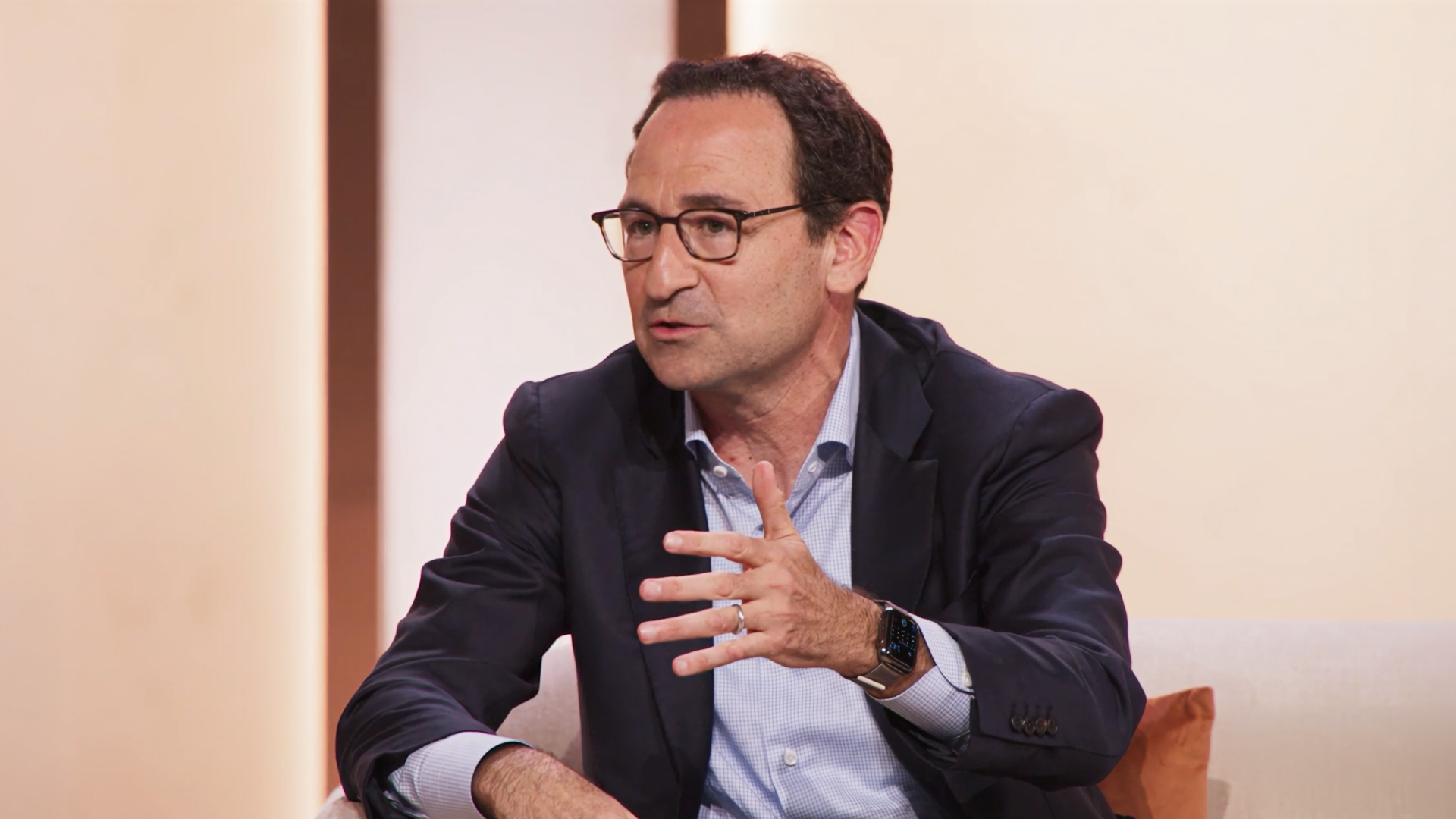
Blackstone’s Jon Gray Addresses 700+ Clients | May 2026
Blackstone President & COO Jon Gray outlines his macro outlook and top investment themes at a large client event, expressing broad optimism on AI infrastructure, data centers, defense, real estate logistics, private credit, and select geographies including the US, Middle East, India, and Japan. He also details four recent Blackstone initiatives - Anthropic Service Co., BXDC, a Google TPU venture, and BXN1 - as ways to capture the AI-driven capital expenditure cycle across the full infrastructure and deployment stack.
5 Jun 2026
BlackstonePrivate Markets
What do Private Equity Investors Look For? Blackstone’s Playbook
Blackstone's Viral Patel speaks with Courtney Reagan to explain the firm's private equity investment approach, using diverse examples such as sandwich shops, space launches, and AI to illustrate how disparate businesses can fit within a single strategy. The video offers a high-level, accessible overview of Blackstone's deal selection criteria and portfolio construction philosophy.
4 Jun 2026
BlackstonePrivate Markets
AI at Scale: A Conversation with Blackstone’s CTO and Global Head of the Operating Team
Blackstone's CTO John Stecher and Global Head of the Operating Team Rodney Zemmel discuss where AI creates durable investment value, highlighting "picks and shovels" infrastructure, proprietary-data-moat software, and AI-enabled physical industries as the most compelling opportunities. The piece also outlines Blackstone's internal AI adoption playbook across its 270+ portfolio companies, emphasizing CEO-level ownership, clear ROI, and the launch of a new AI services venture with Anthropic to address the enterprise deployment bottleneck.
7 May 2026

BlackstonePrivate Markets
Market Views: The Year of the IPO
Blackstone President & COO Jon Gray delivers his economic outlook for 2026, expressing optimism about U.S. economic resilience, an IPO market revival anchored by major tech listings, and Blackstone's own pipeline of nine companies filed globally. He also addresses misconceptions around private credit risks, differentiates software company quality in an AI-disrupted landscape, and outlines Blackstone's strategy to become the largest investor in AI infrastructure, targeting six gigawatts of data center leases representing ~$100 billion in spend.
29 Apr 2026

BlackstonePrivate Markets
Portfolio Spotlight: MechaComic (formerly Amutus)
Blackstone's Head of Private Equity in Japan and MechaComic CEO Takashi Kodama discuss the firm's partnership and the investment thesis behind the digital comics platform, which was rebranded from Amutus in April 2026. The piece highlights the growing opportunity in digital entertainment as a rising share of consumer discretionary spending, positioning MechaComic as a key portfolio holding in Blackstone's Japan-focused private equity strategy.
23 Apr 2026

BlackstonePrivate Markets
Private Credit Explained: Market Risks, Returns & What the Headlines Miss
In this April 2026 webinar, Blackstone President & COO Jon Gray and Global CIO of Credit & Insurance Michael Zawadzki discuss market risks, return characteristics, and common misconceptions surrounding private credit. They make the case that private credit continues to play a meaningful role in long-term institutional portfolios despite recent negative media coverage.
16 Apr 2026
BlackstonePrivate Markets
What’s Really Happening In Private Credit?
Blackstone Credit & Insurance CIO Michael Zawadzki addresses common misconceptions about private credit, contrasting today's direct lending metrics - such as sub-1x vehicle leverage and ~37% loan-to-value ratios - with the conditions that caused the 2008 global financial crisis. He argues that default fears are overstated given resilient corporate earnings and strong portfolio EBITDA growth, while acknowledging the inherent illiquidity premium as a deliberate feature of the asset class.
8 Apr 2026
BlackstonePrivate Markets
Private Credit: Myth vs. Fact
Blackstone addresses common misconceptions about private credit by contrasting alarmist claims with empirical data, covering systemic risk comparisons to the GFC, regulatory transparency, credit quality metrics, AI/software exposure, and suitability for individual investors. The piece draws on BCRED portfolio data - including 11% EBITDA growth, ~40% improvement in interest coverage ratios, and a ~1% industry realized loss rate over 20 years - to argue the asset class remains structurally sound and well-regulated.
31 Mar 2026